
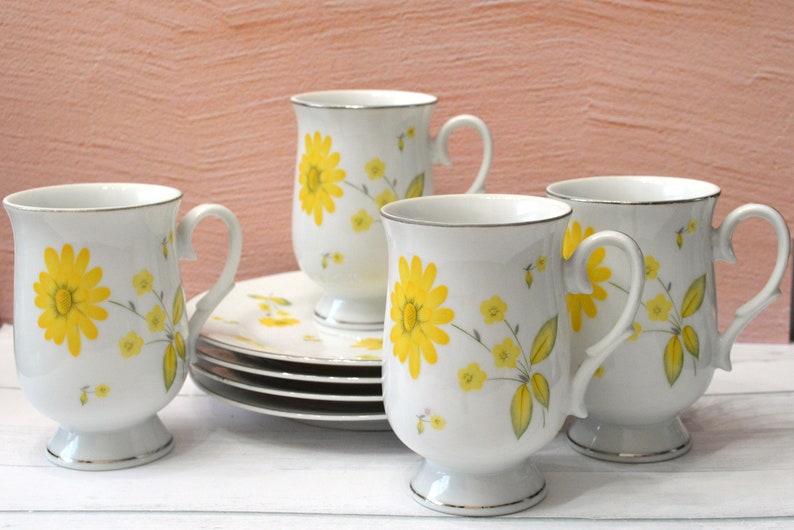
Have you found your dream china set at an antiques store? Do you have an heirloom set that’s been passed down through generations of your family? Here are some tips to keep them sparkling and beautiful!
Vintage china sets are one of my weaknesses. I fall in love over and over with the stunning patterns and colors. Contemporary china patterns just can’t compare! Once you’ve found or inherited your perfect set, here are some ways to keep it looking great.
Dish Sets with Gold Trim or Decoration
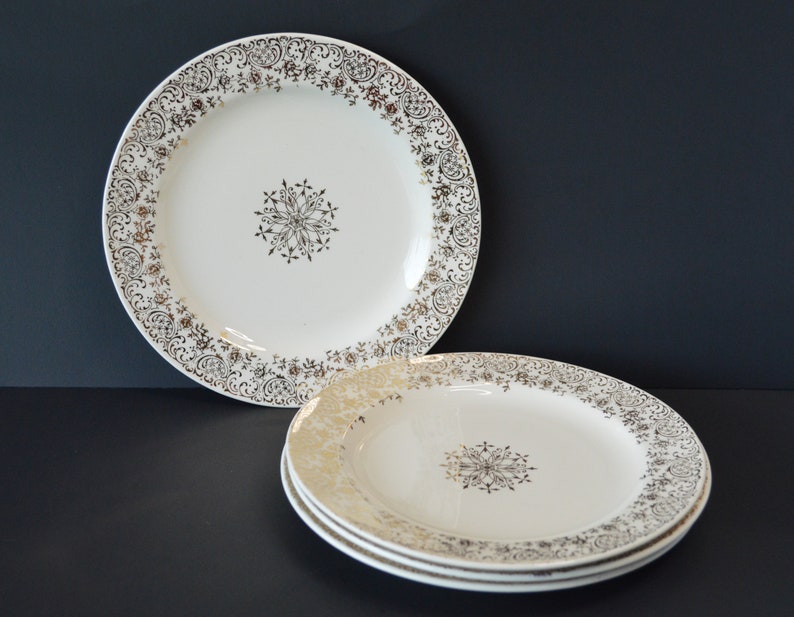
Gold prices dipped beginning in the 1940s and didn’t start climbing again until the 1970s. Since gold was relatively inexpensive, it became a popular trim for dishware and housewares throughout the 1950s. The popularity of gold trim began to dip in the 1960s, when a more “mod” look became popular. Some sets had exclusively gold trim, like these stunning plates from Edwin M. Knowles. Others had gold trim just around the edge or the verge. Platinum trim was less common, but still readily found.
The following tips are also true of most dinnerware from the 1960s and earlier, such as those with underglaze decal decorations, even if they don’t have gold or platinum trim.
Regardless of the type of metal used or the extent of the decoration, vintage plates should be hand washed to keep them looking their best. If you place them in the dishwasher, the metallic trim will wear off pretty quickly. Use a mild dish soap and avoid citrus-scented soaps. I prefer classic Ivory liquid dish soap for my vintage dishes. Very hot water, too, can cause crazing or even cracking due to temperature fluctuations. The purpose of the dish soap is to remove residue and kill germs. Warm water is sufficient for hygiene and will protect your dishes from damage.
Antique Dishes
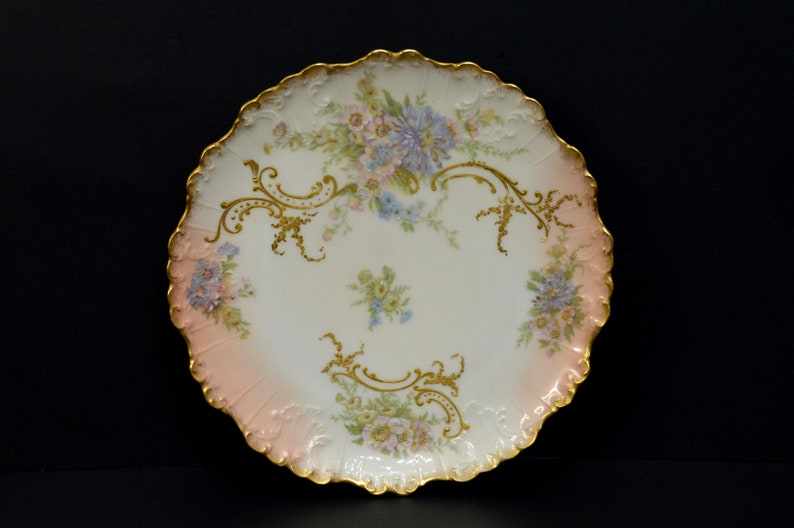
Antique dishes, such as the Limoges plate shown here, also tend to be very lavishly decorated with gold trim and fancy floral motifs, often hand-painted. If you’re lucky enough to have a set of this exquisite dinnerware, be sure to treat it with special care!
As with gold-trimmed dishes, antique dishware can’t stand up to the dishwasher. Careful, gentle handwashing with a mild, non-citrus dish soap will keep it looking good. When washing antique or heirloom china, I line the bottom of my sink with a folded dishtowel. This way, if a piece slips out of my hand, it’s less likely to break. As with other older dishes, use warm water, not hot. Wash antique or heirloom dishes as soon as possible after use. Leaving food residue on the dishes can cause stains and wear.
China from the 1970s or Later
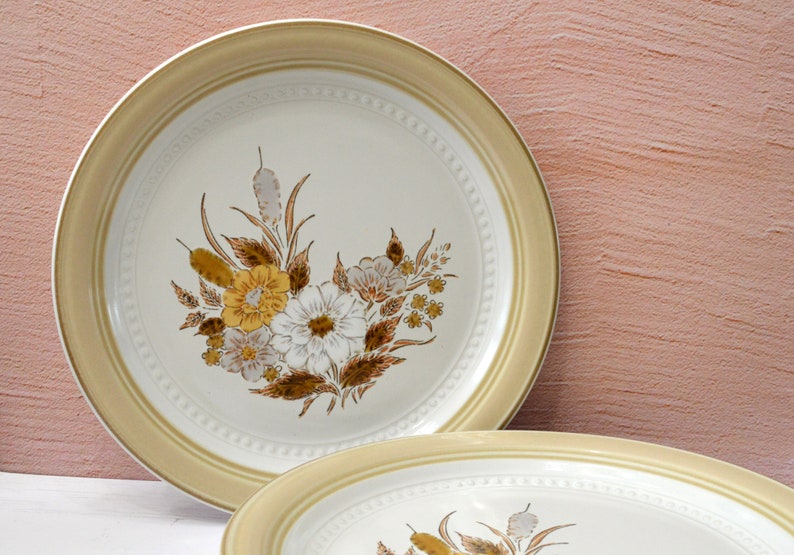
If your vintage china is more recent, such as these stoneware plates by Johann Haviland, they’re a little easier to care for and a better choice if you don’t enjoy handwashing. Dishwashers were invented all the way back in 1886 by Josephine Cochrane, but they didn’t become common in homes until about the 1970s. Therefore, china didn’t become dishwasher-safe until about the 1970s! Most china produced in the 70s or later will be safe in the dishwasher. If it shouldn’t go in the dishwasher, it will usually be marked “Hand Wash Only” on the back. “Hand Wash Recommended” means just that – you can put it in the dishwasher, but handwashing will ensure that your lovely dinnerware isn’t damaged. These plates can usually be left soaking in the sink if needed and aren’t susceptible to crazing from high water temperatures.
Glass and Milk Glass
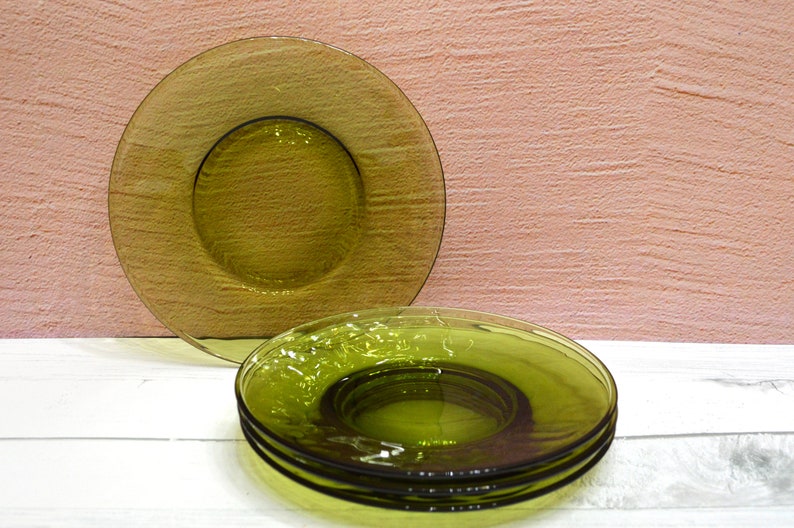
Most undecorated glass and milk glass dishes can also go in the dishwasher, with a few caveats. If you have hard water, any glass washed in the dishwasher will be prone to etching – it looks like the glass is dirty, but it’s actually many microscopic scratches all over the piece and can’t be removed. If that’s an issue in your area, definitely skip the dishwasher with vintage glass. Also, if your glass plates have any sort of decoration or trim, the dishwasher will take it off over time (and that includes vintage Pyrex!). Mild soap and gentle hand washing are especially important if your glass has metallic trim. Washing with harsh soaps or rubbing the trim will wash it off. Depression glass also should be hand washed, regardless of decoration. Milk glass plates from the 1960s or newer won’t be harmed by the dishwasher, but handwashing in warm water is always safer for antique, heirloom, or valuable milk glass.
Wood Dishes and Serving Ware
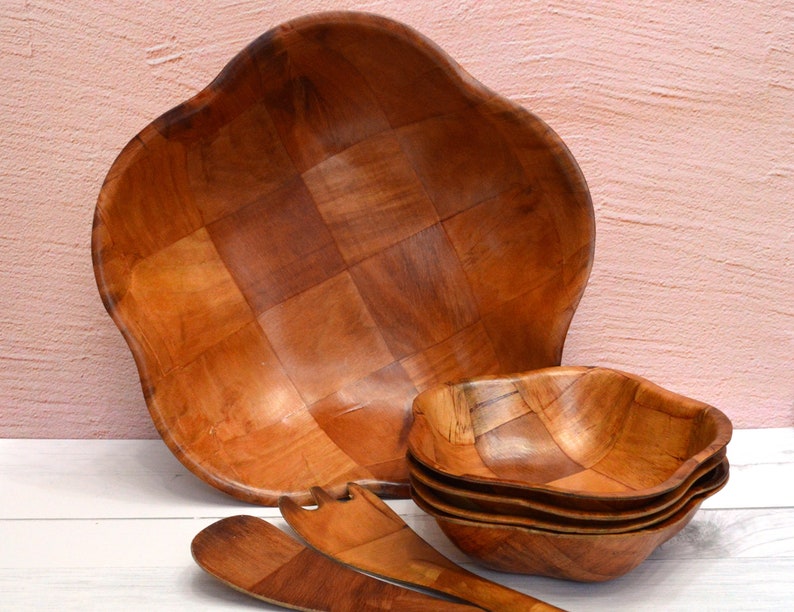
Wood dishes, like this salad serving set, became popular in the 1970s and 1980s. The dishwasher will destroy wood. Wood dishes or serving pieces are always hand-wash only. To avoid staining, don’t use them with strongly-colored foods (looking at you, beets) and wash them as soon as you’re done using them. Don’t allow them to air dry – the water can seep into the wood and ruin it. Dry them with a dishtowel as soon as they’re washed.
Some General Advice
I’ve washed a lot of dishes over the years, and here are a few mistakes I’ve made so you don’t have to repeat them!
- Be mindful of keeping dishes clear of the faucet when washing and rinsing. I’ve broken more than one plate or cup by accidentally whacking it against the faucet!
- When you stack dishes in a dish drainer or drying rack, place the larger pieces toward the back and shorter pieces toward the front. Start with the last spot at the back and place the dishes in front of each other. If you don’t, you might accidentally chip an antique Haviland dinner plate by hitting the edge with a second plate you’re trying to place behind it. (Yes, I did that. Ouch!)
- I mentioned it earlier, but in case you missed it – if the dishes are valuable, irreplaceable, or sentimental, use a folded towel in the bottom of the sink to lessen the chance of breakage if a wet dish slips out of your hand.
- Temperature changes are dangerous for china and glass. Don’t put cold dishes in hot water, and don’t put vintage or antique china in the oven unless it’s explicity marked “Oven Safe”. Check that burners are off and cool before placing china or glass on the stovetop.
- And a tip from the WWII era – when you wash your china, dishwashing gloves will work wonders for keeping your hands soft and your nails unbroken!
0 Comments