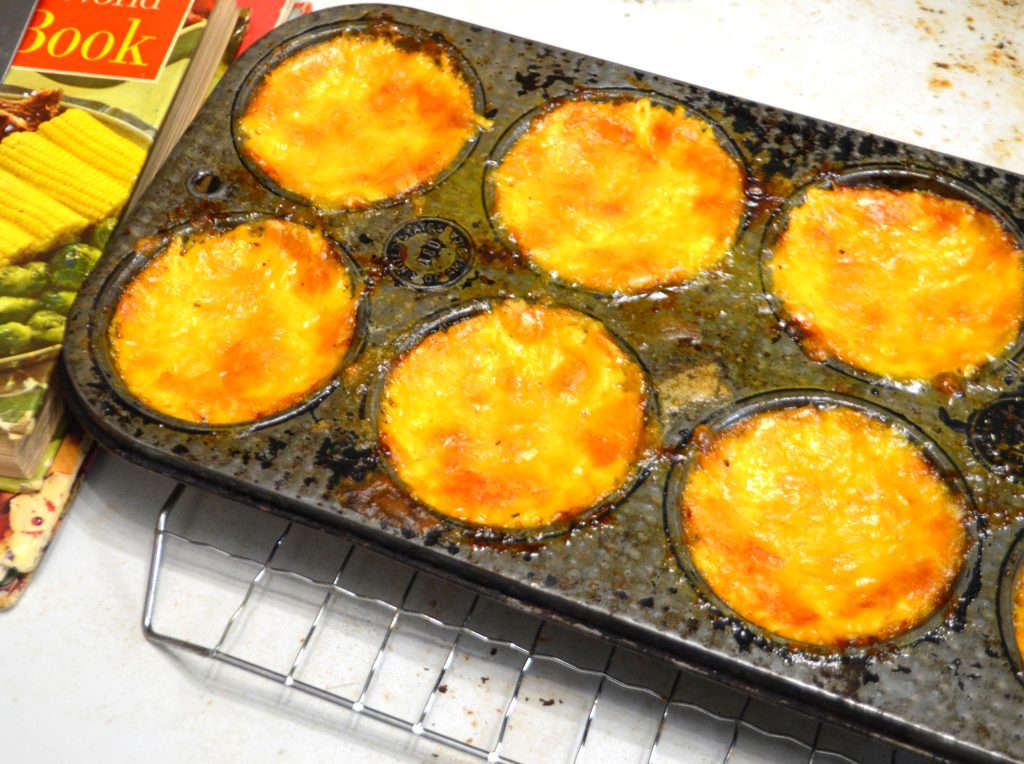
If your favorite part of the pizza is the melty, gooey cheese, boy, do I have a recipe for you! This recipe is called Fromage, which, of course, is just the French word for cheese. “Baked cheese” might be a more descriptive name for it. The recipe came from The American Woman’s Cookbook, which was first published in 1938. This dish features a metric ton of cheese baked with egg yolks and milk so it sets up into a little muffin, almost like an individual soufflé without the flour. The flavor depends mostly on the type of cheese you choose, but the result is a cheese lover’s dream!
I altered the recipe a little bit from the original. We’re generally low-carb for health and vanity reasons, so I used whipping cream instead of the milk the original recipe called for. Half-and-half also works. I also added pepper for a little more flavor and divided the recipe into eight muffin cups instead of six ramekins. I probably could have made it twelve instead of eight – a little of this goes a long way! You may end up with leftovers, but these happen to also be delicious cold right out of the fridge!
If you do bake these in ramekins, you can serve them right away, still in the ramekins. If you put them in a muffin tin, let them cool for 10 minutes or so before removing them from the tin with an offset spatula.
The original recipe doesn’t specify a type of cheese to use. You can use any kind you like that will melt well in the oven. I made the recipe with block cheddar which I shredded myself. I can’t say whether it would work with pre-shredded packaged cheese, which has starch or cellulose added. Packaged shredded cheese wasn’t introduced until 1958 and originally didn’t contain anti-caking agents, so the recipe was certainly developed using freshly shredded cheese.
Fromage Recipe
2 egg yolks
1 cup milk, cream, or half-and-half
Dash of paprika
1/4 teaspoon salt
1/2 teaspoon ground black pepper, optional
4 1/2 cups shredded cheese
1 teaspoon butter, melted
Beat the egg yolks until thick and lemon-colored. Add the remaining ingredients and stir to combine. Spoon the mixture into eight buttered ramekins or muffin cups. Bake at 300 degrees for 20 to 30 minutes or until set – the cheese will be golden brown and the centers won’t be jiggly. Allow to cool for 10 minutes on a wire rack before removing to a serving platter if using a muffin tin. Serves 8.
If you make this recipe, please let me know what you think in the comments below!
If you’re a fellow vintage lover, be sure to check out our online shop, Pink Nose Vintage. We’re happy to offer readers of our blog 20% off purchases! Please use coupon code PNVBLOG at checkout.
Our middle child has gotten her own place! Yay! We’re on our way to becoming empty nesters. I devised this (very easy) knitting pattern as a housewarming gift for her.
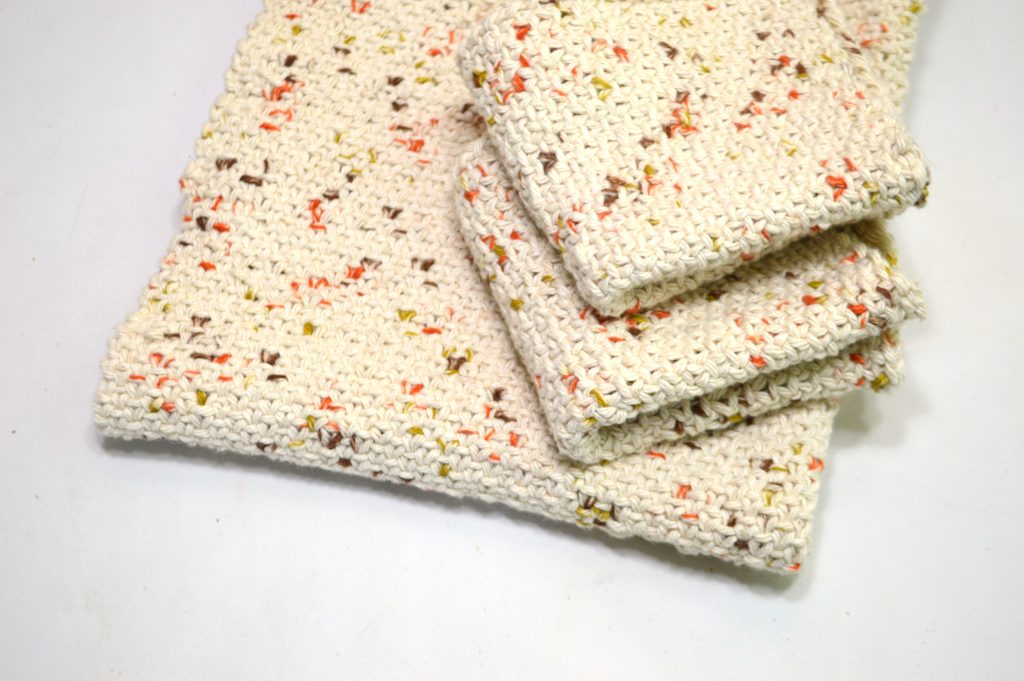
She loves fall and fall colors, so I chose Peaches and Creme yarn in a color called Oasis. It’s an oatmeal-colored yarn with little flecks of brown, orange, and mustard yellow. Four 2-ounce balls were enough to make two dishcloths and a dishtowel.
The knit stitch I used is called Fabric Stitch. It makes a tight, dense fabric with a minimum of stretch. It has a nubby texture on the reverse side and a smoother, woven texture on the right side. You’ll want to use needles that are a little larger than usual to knit this pattern.
The stitch pattern consists of only two rows and is easy to memorize, so this is a perfect project for TV-watching or listening to a podcast!
Knit Dishcloth and Towel in Fabric Stitch
Size:
The dishcloth measures approximately 8 by 8 inches. The dishtowel measures about 16 by 20 inches.
Materials:
Approximately 8 ounces of 100% cotton yarn will make two dishcloths and one dishtowel.
Size 10 knitting needles or size required to obtain gauge
Yarn Needle
Gauge:
21 stitches to 4 inches in Fabric Stitch pattern
Instructions:
For dishcloth:
Cast on 42 stitches. Row 1: *K1, move yarn to front of work, slip 1 as if to purl, move yarn to back; repeat from * across, ending with yarn in front, slip 1. Row 2: *P1, move yarn to back of work, slip 1 as if to purl, move yarn to front; repeat from * across, ending with P2. Repeat Rows 1 and 2 until piece measures about 8 inches. Bind off all stitches in knit. Weave in ends and block if desired.
For dishtowel:
Cast on 84 stitches. Row 1: *K1, move yarn to front of work, slip 1 as if to purl, move yarn to back; repeat from * across, ending with yarn in front, slip 1. Row 2: *P1, move yarn to back of work, slip 1 as if to purl, move yarn to front; repeat from * across, ending with P2. Repeat Rows 1 and 2 until piece measures about 20 inches. Bind off all stitches in knit. Weave in ends and block if desired.
If you make this pattern, please let me know what you think in the comments below!
If you’re a fellow vintage lover, be sure to check out our online shop, Pink Nose Vintage. We’re happy to offer readers of our blog 20% off purchases! Please use coupon code PNVBLOG at checkout.
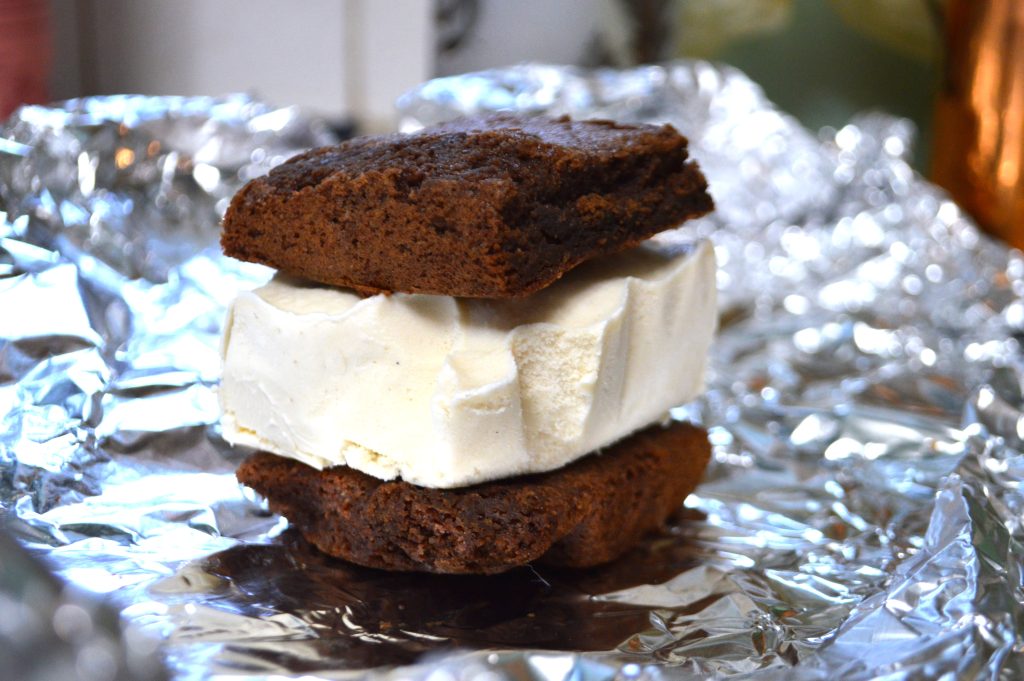
This recipe for Chocolate Chew Ice Cream Sandwiches comes from the 1945 booklet, “Baker’s Favorite Chocolate Recipes; A Handbook of Chocolate Cookery”. The recipe is for a rich, chewy chocolate cookie, cut into squares and layered with ice cream. My family agreed that without the ice cream, the cookies would make perfect brownies!
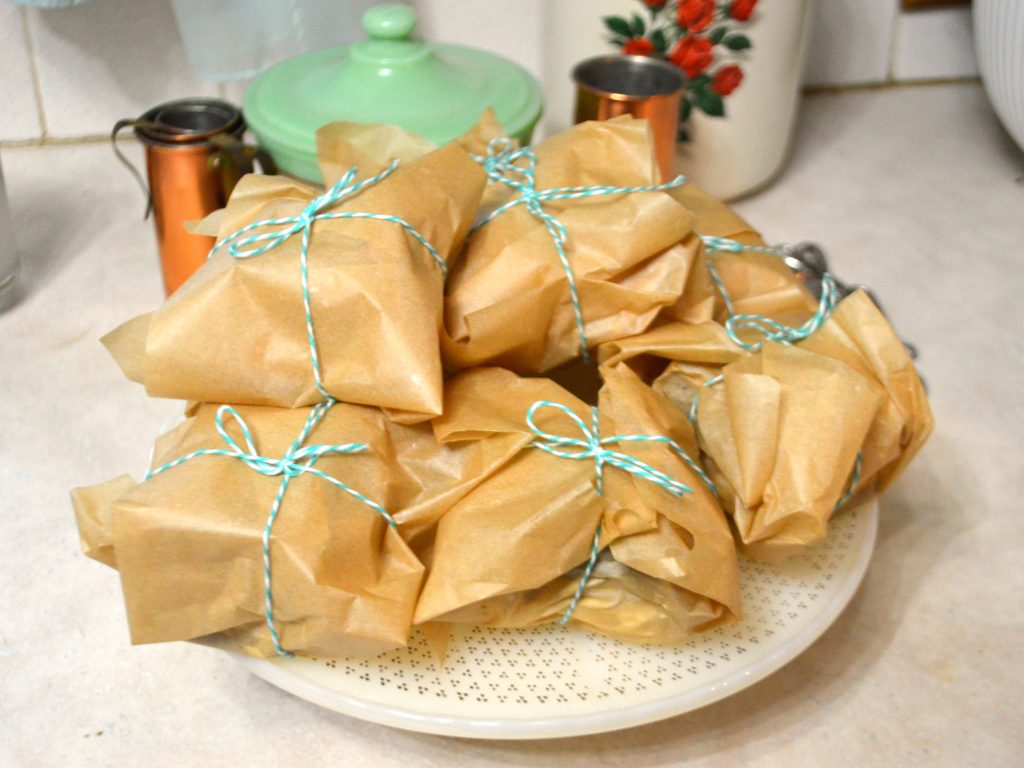
Wrapped individually in parchment, tied with baker’s twine, and stacked on a vintage cake plate, these were a perfect party dessert!
I didn’t tell anyone what they were in advance, so unwrapping them was half the fun!
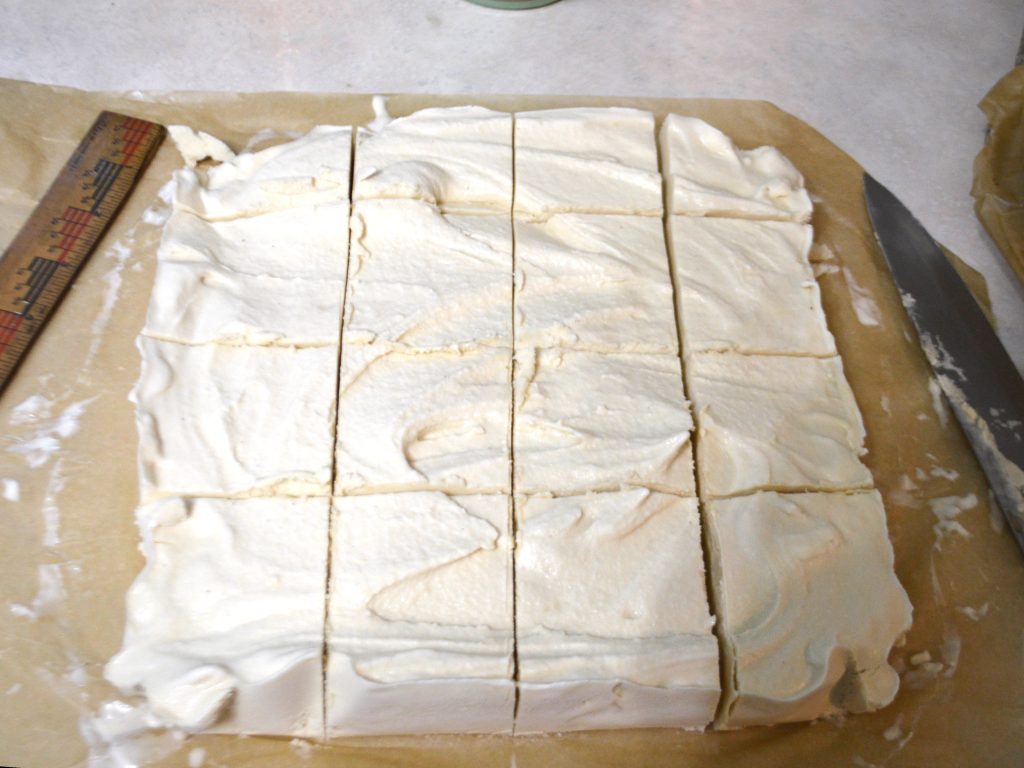
For the ice cream, I used my usual homemade vanilla ice cream recipe, but you could also use store-bought. To make it easier and less messy to assemble the sandwiches, I spread the soft ice cream into the same pan I made the cookies in and cut it into squares the same size as the cookies after it had frozen solid. I think I might start doing this with homemade ice cream every time I serve it! Having the ice cream portioned into squares was convenient not just for the recipe but for individual servings when it came time to eat the leftovers.
Next time I make these, I think I’ll try them with cherry vanilla ice cream!
Chocolate Chew Ice Cream Sandwich Recipe
1/2 cup sifted flour
1/2 teaspoon baking powder
1/4 teaspoon salt
4 tablespoons butter
1 cup sugar
2 well-beaten egg yolks
2 squares chocolate, melted and cooled
1 teaspoon vanilla
2 egg whites
Sift the flour together with the baking powder and salt three times. Cream the butter, then add the sugar gradually, creaming well. Add the egg yolks and blend well. Blend in the melted chocolate and vanilla, then the flour. Beat the egg whites until they hold up in moist peaks and fold into the chocolate mixture. Turn the batter into a parchment-lined 9-by-9-inch pan. Bake at 325 degrees F for 30 to 35 minutes or until set. When cool, cut into 2 1/4-inch squares. Place ice cream between the squares, using two cookies per sandwich. Store in the freezer until serving time, either individually wrapped or stacked with parchment between each sandwich to prevent them from sticking together. Makes 8 ice cream sandwiches.
If you make this recipe, please let me know what you think in the comments below!
If you’re a fellow vintage lover, be sure to check out our online shop, Pink Nose Vintage. We’re happy to offer readers of our blog 20% off purchases! Please use coupon code PNVBLOG at checkout.
In spite of all the health authorities who tell me not to, I absolutely love using raw eggs in recipes that are intended to be sweet and creamy. Eggs add a velvety texture and a rich flavor that can’t be matched. In this particular recipe, they also add color, transforming what would be a bright white icing into a muted ivory shade that’s perfect for retro-looking cakes or cookies.
The trick to making this icing into a fluffy, ivory-colored cloud is to beat the butter much longer than most icing recipes recommend. For the perfect smooth, creamy texture, the butter should be beaten until it turns almost white and looks very much like soft whipped cream.
This does make the icing exceptionally soft and so not great for piping! If you need a decorator’s icing, you can still use this recipe, but only beat the butter for two minutes or so, until it becomes creamy, and not so long that it softens and changes color.
The recipe calls for both butter and shortening. For shortening, I use beef tallow or lard, which probably sounds strange, but I adamantly avoid ultra-processed foods. Of course, vegetable shortening would absolutely work, or you can use all butter if you prefer, but shortening will keep the texture from becoming too soft. If you use all butter, you may have to chill the icing for a bit before spreading it on the cake.
And, yes, this recipe does contain raw eggs! If you’re serving it to someone who’s very old, very young, immunocompromised, pregnant, or nursing, or if you’re concerned about the safety of raw eggs for any reason, you can omit the eggs. The icing won’t be as rich and flavorful, but it will still be very creamy and delicious! And should you store the iced cake in the fridge? Yes, probably.
Creamy Vanilla Icing Recipe
3/4 cup butter, softened
1/4 cup shortening (lard, tallow, or vegetable shortening)
2 teaspoons vanilla extract
2 eggs
Pinch of salt
4 cups powdered sugar, sifted
Heavy cream or milk to thin as needed
Using an electric mixer or stand mixer with the beater attachment, beat the butter and shortening together on medium speed until the mixture becomes almost white and resembles soft whipped cream. This may take about 10 minutes. Scrape the bowl occasionally.
Turn mixer to low and beat in vanilla, eggs, and salt until fully incorporated. Add the powdered sugar gradually, one cup at a time. Scrape the bowl after each addition.
Once all of the sugar is beaten in, mix in a splash of cream or milk only if needed to thin the icing to spreading consistency.
This recipe makes enough icing to fill and frost two 9-inch layer cakes.
If you make this recipe, please let me know what you think in the comments below!
If you’re a fellow vintage lover, be sure to check out our online shop, Pink Nose Vintage. We’re happy to offer readers of our blog 20% off purchases! Please use coupon code PNVBLOG at checkout.
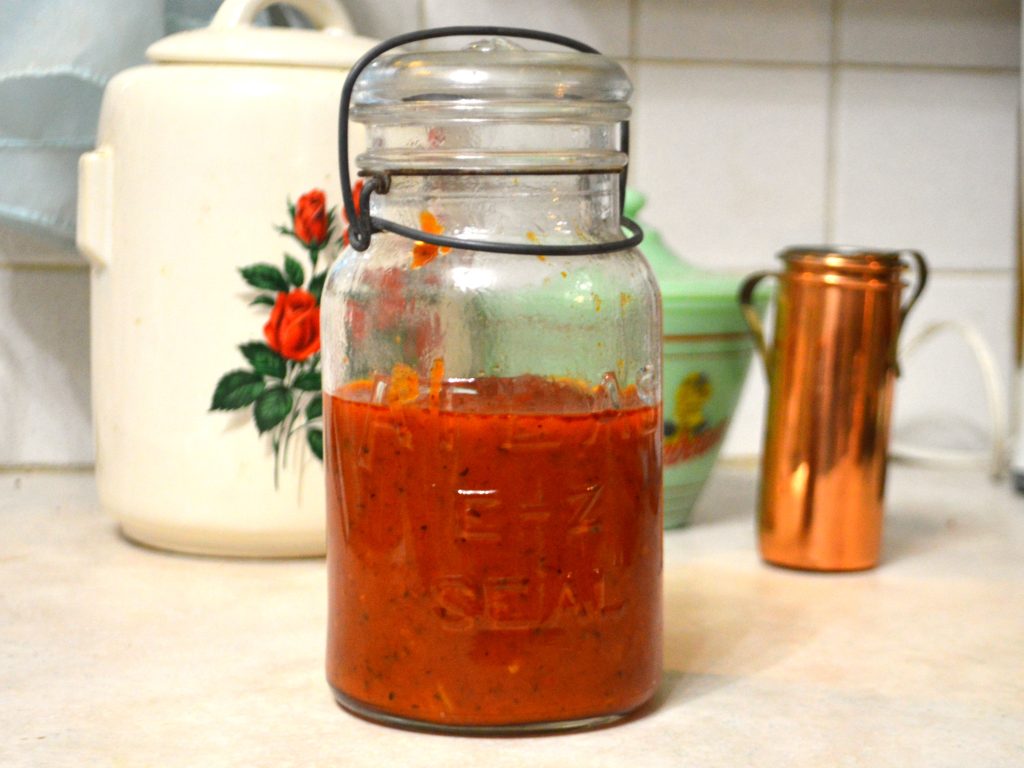
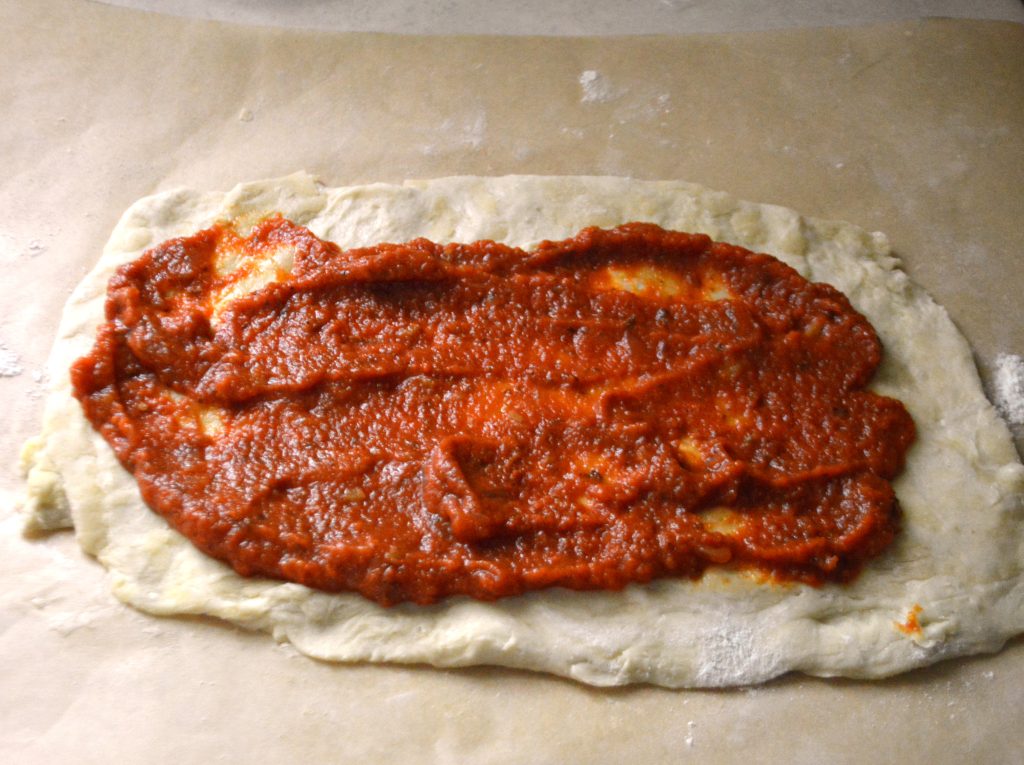
A couple of weeks ago, I was planning a birthday party for my daughter at which I planned to serve pizza rolls. While checking ingredients, I realized that I had no tomatoes to make sauce, but I did have two quarts of tomato juice left over from Bloody Marys. Knowing that I was unlikely to use the juice for anything else, I decided to try making my pizza sauce from the juice, although I was a little concerned that juice would have too much liquid to cook down into a nice, thick sauce. Quite the contrary – it turned out that the sauce was a great way to use up the leftover tomato juice!
In fact, juice was an even better choice than tomatoes in some ways. Because the juice is nice and smooth, you can skip the step of peeling and seeding tomatoes or removing the skins and seeds with a food mill. The sauce ended up velvety-smooth and rich right out of the pan. Best of all, cooking the juice down actually took less time than cooking down chopped tomatoes!
This rich, hearty sauce would also be excellent over pasta!
Here’s how I made mine; you can, of course, substitute juice for fresh or canned tomatoes in your own favorite recipe. For reference, I ended up with about three cups of sauce from two quarts of juice.
From-Scratch Pizza Sauce with Tomato Juice
1 tablespoon lard or other cooking fat
1/4 cup finely chopped onion
4 cloves garlic, minced
2 teaspoons dried Italian herbs or 2 tablespoons chopped fresh basil, parsley, and oregano
1/4 teaspoon red pepper flakes
2 quarts tomato juice
Salt and ground pepper to taste
In a 4-quart saucepan, warm the cooking fat over medium heat. Add onions; sauté until translucent and tender. Add the garlic, Italian herbs, and red pepper flakes and sauté a minute longer until fragrant. Slowly add the tomato juice, stirring to combine. Reduce the heat to low, cover the pan with a splatter screen, and allow the sauce to simmer, stirring occasionally, until reduced to your preferred consistency. This should take about 10 to 15 minutes. Once the sauce is reduced, taste for seasoning and add salt and ground pepper and more red pepper if desired. Yield: About 3 cups of sauce.
If you make this recipe, please let me know what you thought in the comments below!
If you’re a fellow vintage lover, be sure to check out our online shop, Pink Nose Vintage. We’re happy to offer readers of our blog 20% off purchases! Please use coupon code PNVBLOG at checkout.
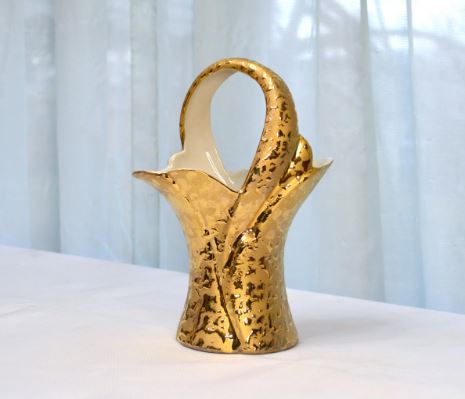
I’m a big fan of all things midcentury and Hollywood Regency, so when I found my first piece of Weeping Gold decades ago, it was love at first sight! What is it, though? Why did it get so popular, and why did it disappear? And how do you clean and care for Weeping Gold? Let’s dig in!
The first piece of Weeping Gold was produced by Kingwood Ceramics in East Palestine, Ohio, in the late 1930s to early 1940s. The procedure involved glazing pottery with a textured glaze, which was followed by a layer of molten gold. The texture under the gold gave a dripping, mottled effect, which was thought to look like tears, so the resulting finish was dubbed “Weeping Gold”. The process was never patented, so Weeping Gold ware was made by a variety of manufacturers, many of them right here in Northeast Ohio.
Weeping Gold hit the market at the end of World War II, when a prosperous American middle class was eager to forget the deprivations of the war. New houses were being built and furnished at breakneck pace, and anything new and shiny was bound to catch consumers’ eyes. Weeping Gold had it all: A brand-new manufacturing process, a lovely and useful product that no one had ever seen before, a luxurious look that many associated with the glamour of Hollywood, and a reasonable price tag thanks to the relatively low and stable price of gold.
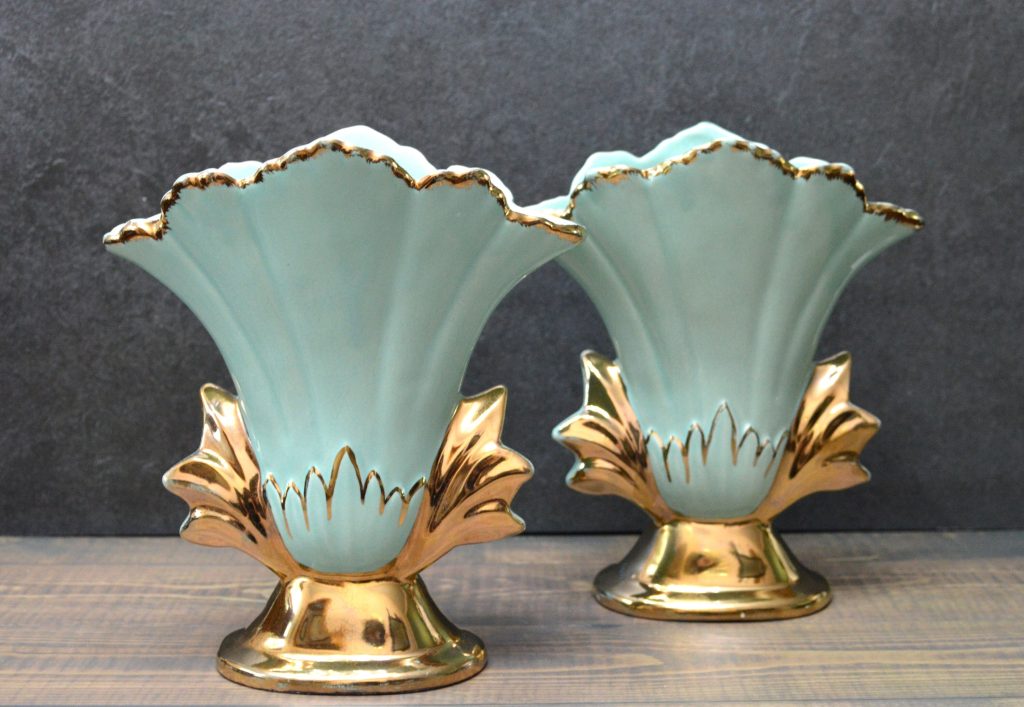
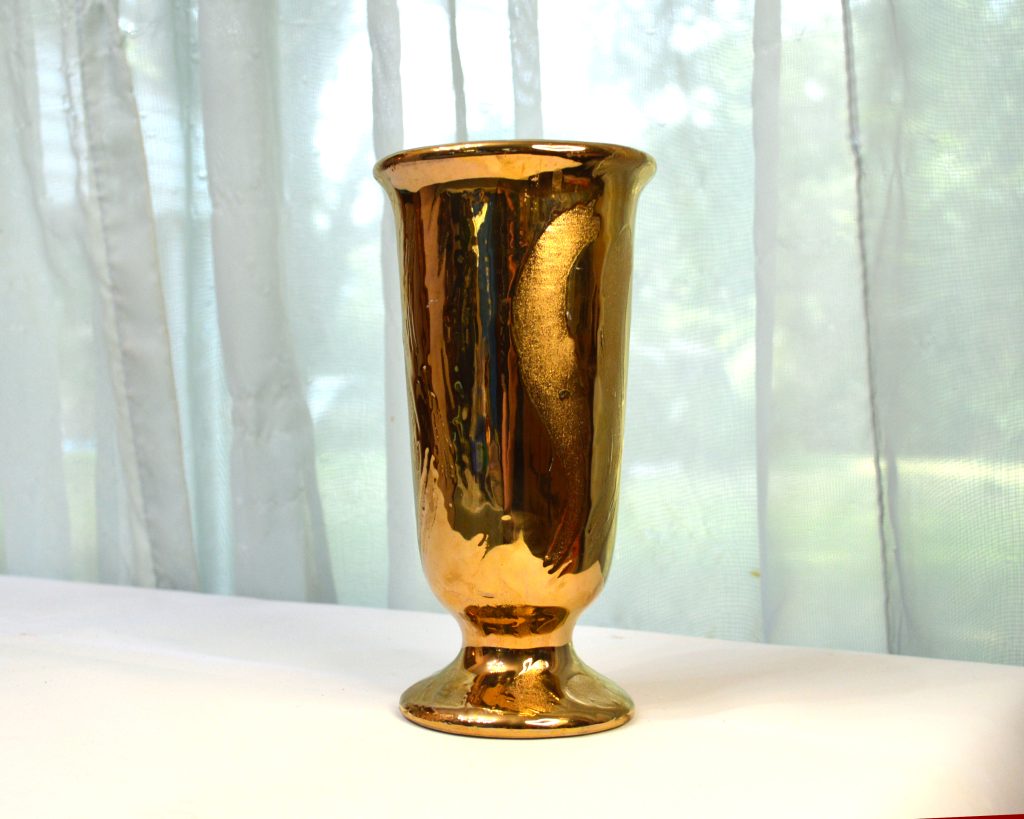
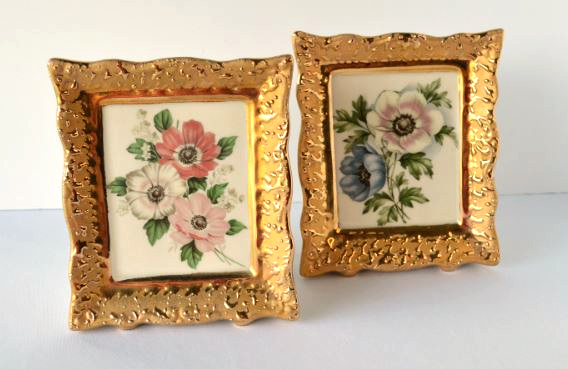
As Weeping Gold grew in popularity, manufacturers innovated to create new art forms using the process. Deena Artware Company of Paducah, Kentucky, introduced a line called Savoy that combined ceramics glazed in beautiful colors with weeping gold accents. Other manufacturers used a textured glaze resembling brushstrokes to create pieces with graceful sweeping lines contrasting matte and shiny surfaces. Some pieces were glazed in a uniform solid gold finish, with no “weeping” at all.
Glazed Ceramic Vases with Solid Gold Glaze by Unknown ManufacturerSwirled Gold Vase by Swetye Ceramic Artware of Salem, OhioWeeping Gold “Photo Frame” Wall-Hanging Planters by Unknown Manufacturer
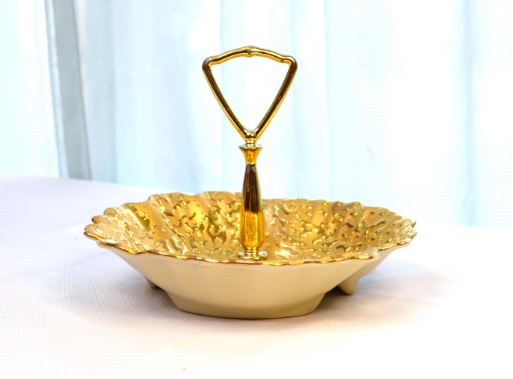
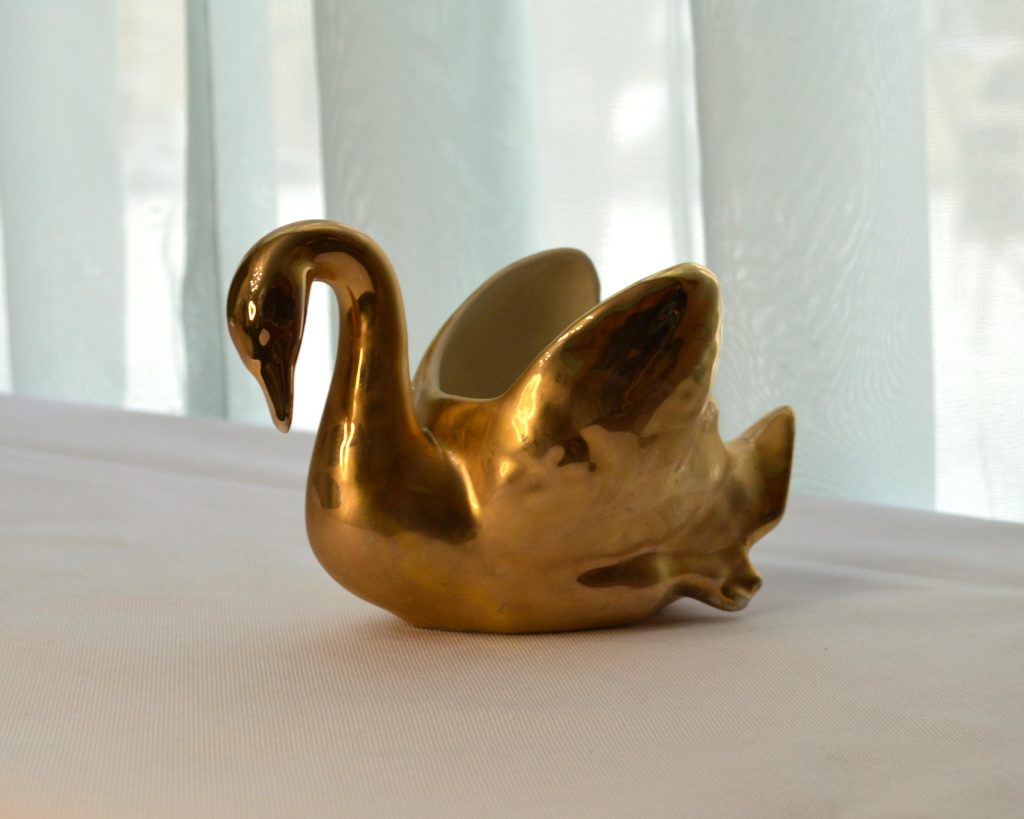
Many household items, both useful and decorative, were produced in Weeping Gold. Vases, planters, figurines, and bowls were all popular and added a touch of Hollywood pizazz to midcentury homes.
Weeping Gold Nut Dish by Unknown ManufacturerGold-Plated Swan Figural Planter by Unknown Manufacturer
Eventually and inevitably, consumer tastes started to change and the price of gold started to rise. By the late 1960s, the price of gold had increased to the point that Weeping Gold ware was no longer profitable for manufacturers, and it disappeared from the market. Luckily for those of us who love it, however, weeping gold ages extremely well, and many pieces can still be found, just as bright and shiny as when they left the kiln decades ago.
How to Care for Weeping Gold
Weeping Gold items can safely be washed by hand using a mild dish soap and hot water. Avoid abrasive or harsh chemical cleaners or scouring pads that could damage the gold. Occasional dusting and buffing with a soft cloth will keep your weeping gold display pieces bright and shiny.
If you’re a fellow Weeping Gold afficionado, you’ll usually find some at Pink Nose Vintage. We’re happy to offer readers of our blog 20% on purchases! Please use coupon code PNVBLOG at checkout.
Interesting, whimsical, unusual…all of that! I knew this was a special piece when I first saw it.
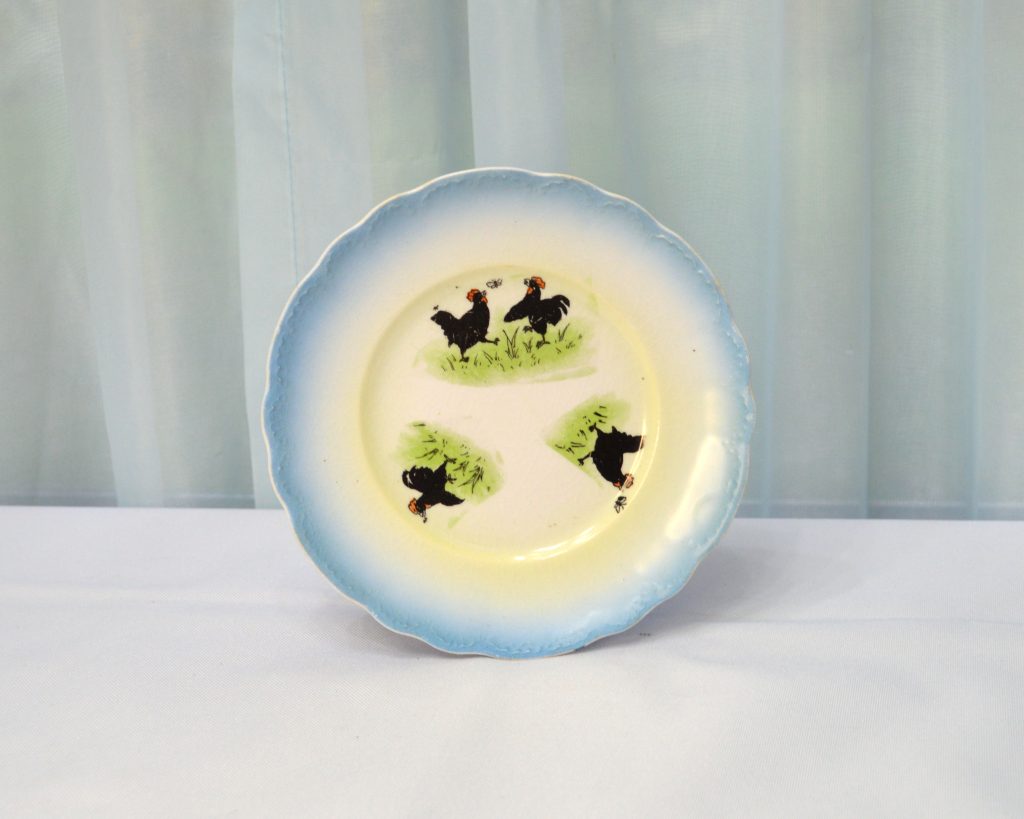
This is an antique plate from Homer Laughlin. The shape is Hudson, which Homer Laughlin produced from 1908 to 1929. There’s no date code on the back, but the shape name is written in script; Homer Laughlin had switched over to block lettering by 1917. This would seem to indicate that this piece was made between 1908 and 1917, but the motif would be more at home in a 1940s kitchen!
Hudson was intended to compete with French Haviland, which you can gather by looking at the scalloped edge and delicate embossing around the verge. Most of the patterns produced on this shape are what you’d expect – plain white with gold trim or lavish floral designs – which makes this one a bit of an oddball. It’s 7.25 inches diameter, so judging by the size, it would be a salad plate. But those chickens!
I’m guessing that this was intended as a child’s plate, or that the decals were added later, although they appear to be original. Maybe the designer of this one was just ahead of the times. Let me know in the comments if you have any clues to how the roosters ended up on this 1910s faux-Haviland plate!
The plate is available in our Etsy shop at this link: https://pinknosevintageltd.etsy.com/listing/1815708157
Have you found your dream china set at an antiques store? Do you have an heirloom set that’s been passed down through generations of your family? Here are some tips to keep them sparkling and beautiful!
Vintage china sets are one of my weaknesses. I fall in love over and over with the stunning patterns and colors. Contemporary china patterns just can’t compare! Once you’ve found or inherited your perfect set, here are some ways to keep it looking great.
Dish Sets with Gold Trim or Decoration
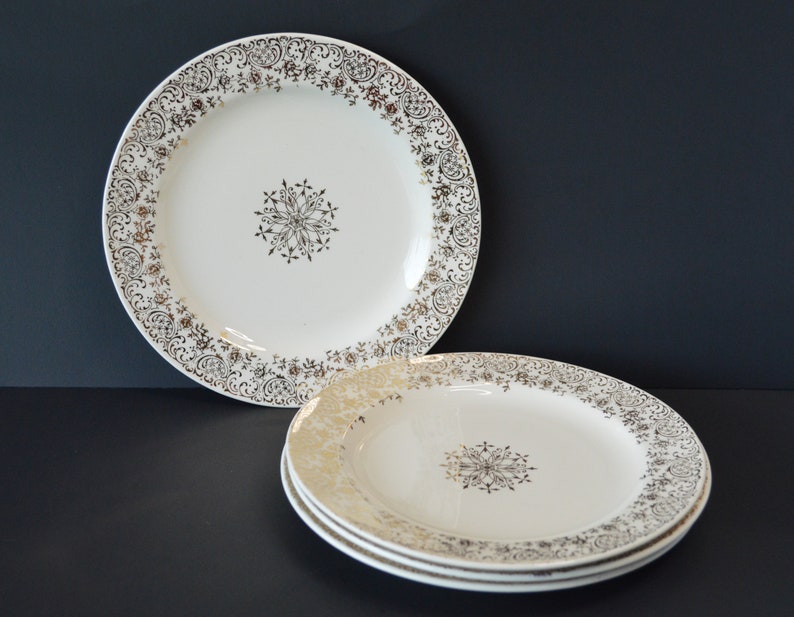
Gold prices dipped beginning in the 1940s and didn’t start climbing again until the 1970s. Since gold was relatively inexpensive, it became a popular trim for dishware and housewares throughout the 1950s. The popularity of gold trim began to dip in the 1960s, when a more “mod” look became popular. Some sets had exclusively gold trim, like these stunning plates from Edwin M. Knowles. Others had gold trim just around the edge or the verge. Platinum trim was less common, but still readily found.
The following tips are also true of most dinnerware from the 1960s and earlier, such as those with underglaze decal decorations, even if they don’t have gold or platinum trim.
Regardless of the type of metal used or the extent of the decoration, vintage plates should be hand washed to keep them looking their best. If you place them in the dishwasher, the metallic trim will wear off pretty quickly. Use a mild dish soap and avoid citrus-scented soaps. I prefer classic Ivory liquid dish soap for my vintage dishes. Very hot water, too, can cause crazing or even cracking due to temperature fluctuations. The purpose of the dish soap is to remove residue and kill germs. Warm water is sufficient for hygiene and will protect your dishes from damage.
Antique Dishes
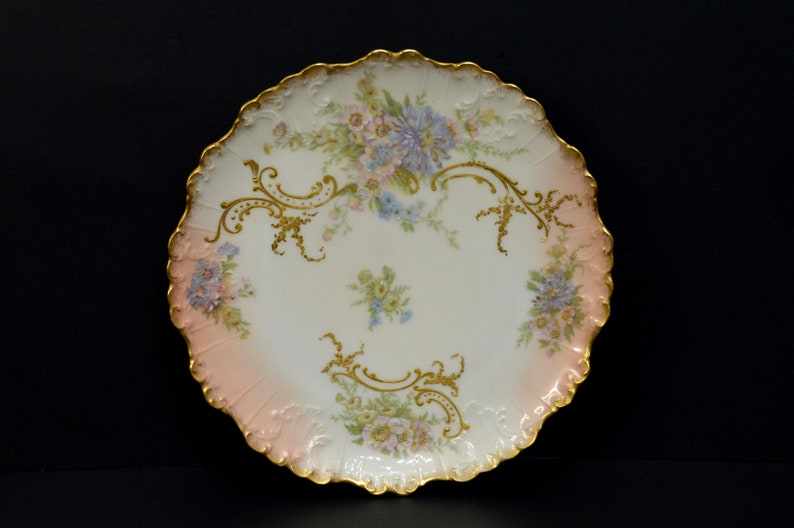
Antique dishes, such as the Limoges plate shown here, also tend to be very lavishly decorated with gold trim and fancy floral motifs, often hand-painted. If you’re lucky enough to have a set of this exquisite dinnerware, be sure to treat it with special care!
As with gold-trimmed dishes, antique dishware can’t stand up to the dishwasher. Careful, gentle handwashing with a mild, non-citrus dish soap will keep it looking good. When washing antique or heirloom china, I line the bottom of my sink with a folded dishtowel. This way, if a piece slips out of my hand, it’s less likely to break. As with other older dishes, use warm water, not hot. Wash antique or heirloom dishes as soon as possible after use. Leaving food residue on the dishes can cause stains and wear.
China from the 1970s or Later
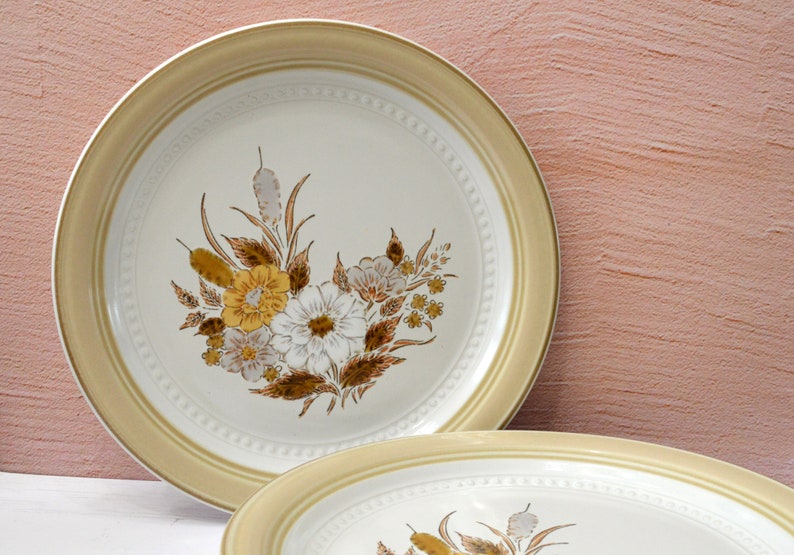
If your vintage china is more recent, such as these stoneware plates by Johann Haviland, they’re a little easier to care for and a better choice if you don’t enjoy handwashing. Dishwashers were invented all the way back in 1886 by Josephine Cochrane, but they didn’t become common in homes until about the 1970s. Therefore, china didn’t become dishwasher-safe until about the 1970s! Most china produced in the 70s or later will be safe in the dishwasher. If it shouldn’t go in the dishwasher, it will usually be marked “Hand Wash Only” on the back. “Hand Wash Recommended” means just that – you can put it in the dishwasher, but handwashing will ensure that your lovely dinnerware isn’t damaged. These plates can usually be left soaking in the sink if needed and aren’t susceptible to crazing from high water temperatures.
Glass and Milk Glass
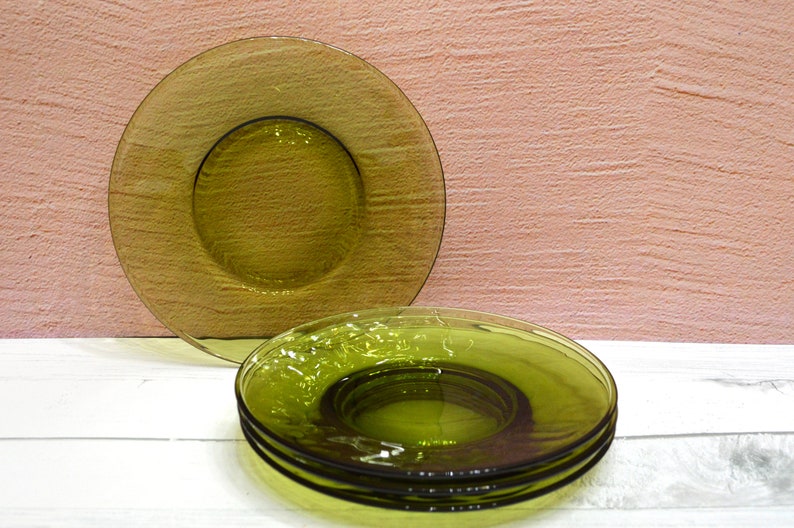
Most undecorated glass and milk glass dishes can also go in the dishwasher, with a few caveats. If you have hard water, any glass washed in the dishwasher will be prone to etching – it looks like the glass is dirty, but it’s actually many microscopic scratches all over the piece and can’t be removed. If that’s an issue in your area, definitely skip the dishwasher with vintage glass. Also, if your glass plates have any sort of decoration or trim, the dishwasher will take it off over time (and that includes vintage Pyrex!). Mild soap and gentle hand washing are especially important if your glass has metallic trim. Washing with harsh soaps or rubbing the trim will wash it off. Depression glass also should be hand washed, regardless of decoration. Milk glass plates from the 1960s or newer won’t be harmed by the dishwasher, but handwashing in warm water is always safer for antique, heirloom, or valuable milk glass.
Wood Dishes and Serving Ware
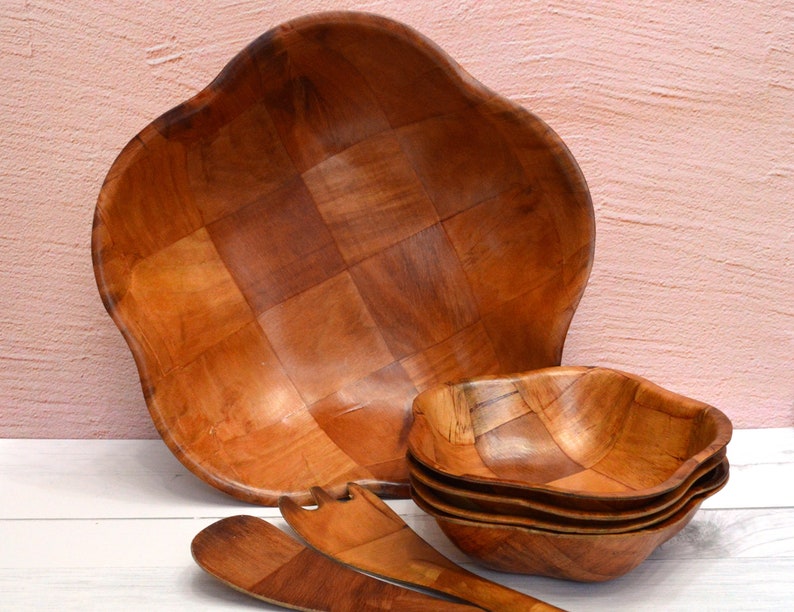
Wood dishes, like this salad serving set, became popular in the 1970s and 1980s. The dishwasher will destroy wood. Wood dishes or serving pieces are always hand-wash only. To avoid staining, don’t use them with strongly-colored foods (looking at you, beets) and wash them as soon as you’re done using them. Don’t allow them to air dry – the water can seep into the wood and ruin it. Dry them with a dishtowel as soon as they’re washed.
Some General Advice
I’ve washed a lot of dishes over the years, and here are a few mistakes I’ve made so you don’t have to repeat them!
Be mindful of keeping dishes clear of the faucet when washing and rinsing. I’ve broken more than one plate or cup by accidentally whacking it against the faucet!
When you stack dishes in a dish drainer or drying rack, place the larger pieces toward the back and shorter pieces toward the front. Start with the last spot at the back and place the dishes in front of each other. If you don’t, you might accidentally chip an antique Haviland dinner plate by hitting the edge with a second plate you’re trying to place behind it. (Yes, I did that. Ouch!)
I mentioned it earlier, but in case you missed it – if the dishes are valuable, irreplaceable, or sentimental, use a folded towel in the bottom of the sink to lessen the chance of breakage if a wet dish slips out of your hand.
Temperature changes are dangerous for china and glass. Don’t put cold dishes in hot water, and don’t put vintage or antique china in the oven unless it’s explicity marked “Oven Safe”. Check that burners are off and cool before placing china or glass on the stovetop.
And a tip from the WWII era – when you wash your china, dishwashing gloves will work wonders for keeping your hands soft and your nails unbroken!
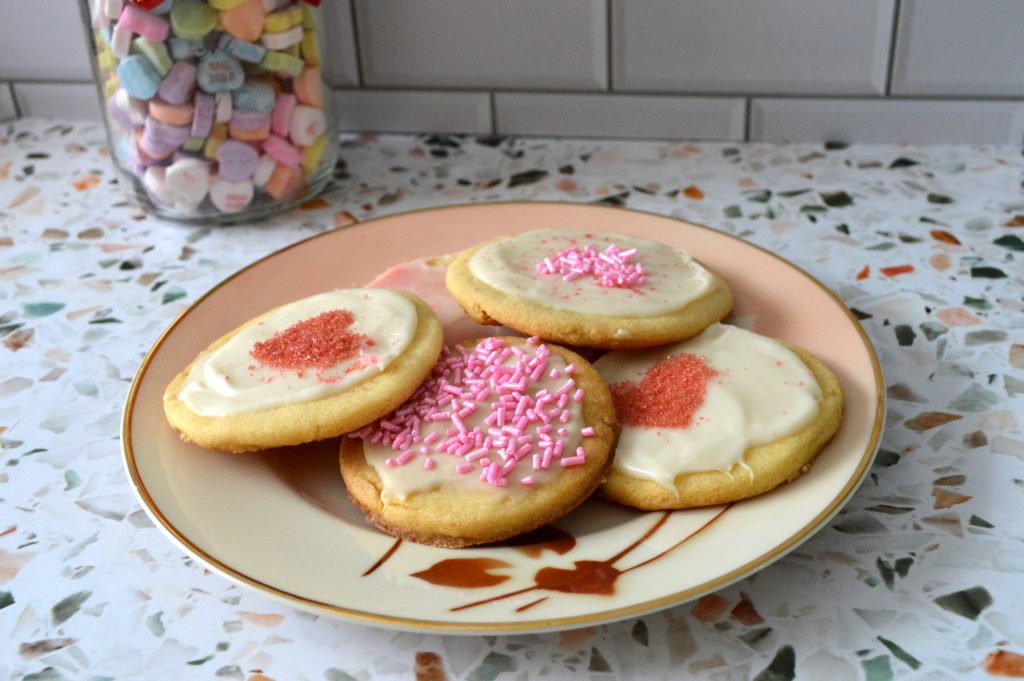
These are the perfect sugar cookies – chewy, soft, and with a delightful vanilla flavor.
I got this recipe years ago from a work friend who got it from a magazine (sorry, I don’t know which one!) that claimed that this was Mamie Eisenhower’s own recipe that she served to visiting dignitaries. I don’t know how accurate that origin story is, but I do know that this is the only sugar cookie recipe I’ve ever tried that comes out just the way I want it every time I make it! I suspect that using egg yolks and cream instead of whole eggs and milk is the secret. I usually roll these to about 1/4 inch thick and bake for 8 minutes, which results in a soft, tender cookie. If you like a crispy cookie, roll the dough thinner and/or bake a few minutes longer. Chewy or crispy, the flavor is superb!
Mamie Eisenhower’s Sugar Cookies
1 1/2 cups flour
1/2 tsp salt
1 tsp baking powder
1/2 cup butter, softened
1 cup sugar
2 beaten egg yolks
1 tsp vanilla
1 tbsp heavy cream
Whisk flour, baking powder, and salt in a small bowl. Cream butter. Add sugar slowly and beat until fluffy. Stir in well-beaten egg yolks and vanilla. Add dry ingredients alternately with cream. Chill at least 1 hour.
Roll to desired thickness and cut with a cookie cutter or the edge of a drinking glass dipped in flour. Sprinkle with sugar and bake at 375 degrees F for 8 to 12 minutes (time will depend on thickness of dough and desired crispness).
I ice these with:
1 cup powdered sugar, sifted, stirred together with 2 tsp vanilla extract., a few drops of liquid food coloring, if desired, and enough cream to thin to spreading consistency.
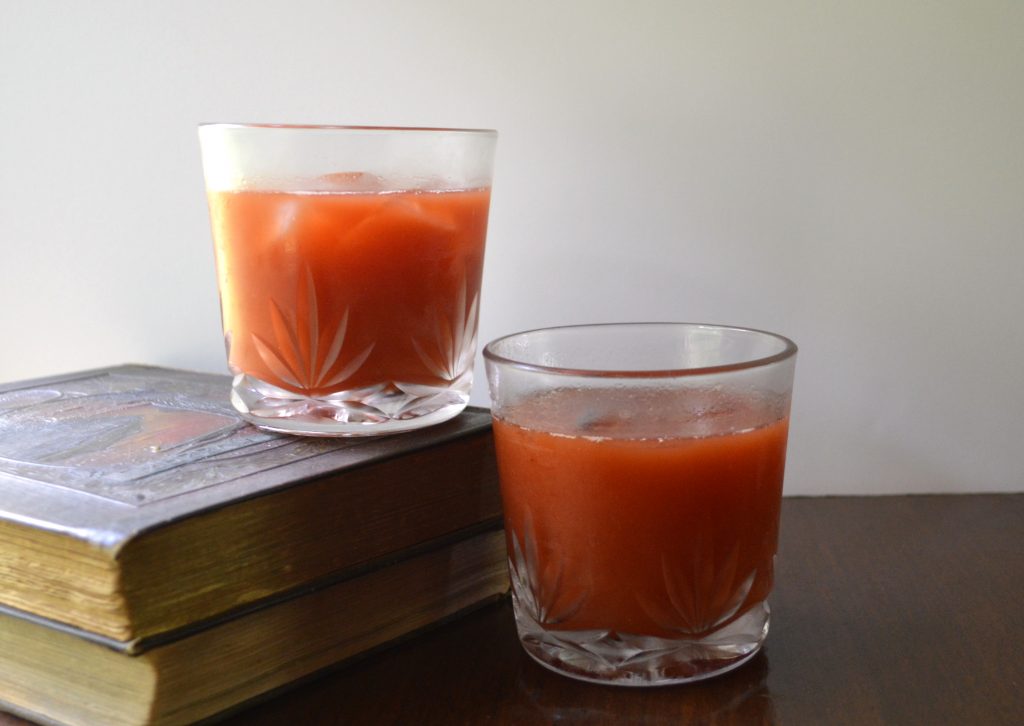
Simple, easy Bloody Marys are a classic savory cocktail.Before Bloody Marys became firey hot and topped with outlandish garnishes, they were a simple savory cocktail. This easy Bloody Mary is based on an authentic 1950s recipe. Serve it up at your next brunch and you’re sure to get compliments!
Easy Bloody Marys
Ingredients:
6 jiggers tomato juice (9 fluid ounces; 1 cup plus 2 tablespoons)
3 jiggers vodka (4.5 fluid ounces; 1/2 cup plus 1 tablespoon)
1 pony lemon juice (1 fluid ounce; 2 tablespoons)
1 teaspoon Worcestershire sauce
Pinch of salt
Pinch of ground black pepper
2 dashes Angostura bitters
Combine ingredients in a shaker with ice; strain into chilled rocks glasses. Serve with ice if desired.
This recipe makes two cocktails. If you’re serving a crowd, double or triple the ingredients and blend in a blender with ice.
Living your best vintage life? Check our website for articles you might enjoy!
This website uses cookies to improve your experience while you navigate through the website. Out of these, the cookies that are categorized as necessary are stored on your browser as they are essential for the working of basic functionalities of the website. We also use third-party cookies that help us analyze and understand how you use this website. These cookies will be stored in your browser only with your consent. You also have the option to opt-out of these cookies. But opting out of some of these cookies may affect your browsing experience.
Necessary cookies are absolutely essential for the website to function properly. These cookies ensure basic functionalities and security features of the website, anonymously.
Cookie
Duration
Description
cookielawinfo-checkbox-analytics
11 months
This cookie is set by GDPR Cookie Consent plugin. The cookie is used to store the user consent for the cookies in the category "Analytics".
cookielawinfo-checkbox-functional
11 months
The cookie is set by GDPR cookie consent to record the user consent for the cookies in the category "Functional".
cookielawinfo-checkbox-necessary
11 months
This cookie is set by GDPR Cookie Consent plugin. The cookies is used to store the user consent for the cookies in the category "Necessary".
cookielawinfo-checkbox-others
11 months
This cookie is set by GDPR Cookie Consent plugin. The cookie is used to store the user consent for the cookies in the category "Other.
cookielawinfo-checkbox-performance
11 months
This cookie is set by GDPR Cookie Consent plugin. The cookie is used to store the user consent for the cookies in the category "Performance".
viewed_cookie_policy
11 months
The cookie is set by the GDPR Cookie Consent plugin and is used to store whether or not user has consented to the use of cookies. It does not store any personal data.
Functional cookies help to perform certain functionalities like sharing the content of the website on social media platforms, collect feedbacks, and other third-party features.
Performance cookies are used to understand and analyze the key performance indexes of the website which helps in delivering a better user experience for the visitors.
Analytical cookies are used to understand how visitors interact with the website. These cookies help provide information on metrics the number of visitors, bounce rate, traffic source, etc.
Advertisement cookies are used to provide visitors with relevant ads and marketing campaigns. These cookies track visitors across websites and collect information to provide customized ads.