
Vintage Clothes Buying Tips for Online Shopping
Tips for Online Vintage Clothes Shopping
Buying clothes online is hard enough, but vintage clothes are even more of a gamble. Materials and sizing have changed a lot over the decades, and both of those affect how the clothing will fit. Here are a few steps you can take to ensure that your happy mail doesn’t turn into a disappointment!
Buy from an established seller. If you’re buying on a marketplace site such as Etsy or eBay, check the seller’s reviews to see what other shoppers have to say. For an independent website, search online for reviews. One or two poor reviews out of many may not indicate a problem, but a pattern of negative experiences should make you think twice.
Check the seller’s policies before you buy. Most independent websites accept returns, but many marketplace sellers do not. That means that if the piece doesn’t fit or you aren’t happy with how it looks in person, you’re likely stuck with it. If that’s not a risk you’re willing to take, make sure that you’re comfortable with the return policy before you buy!
Read the seller’s descriptions thoroughly. A well-written description should give you all the information you need to feel comfortable making a purchase. If the seller’s descriptions don’t inspire confidence, move on!
Don’t rely on a stated numeric or letter size; check the measurements. The seller may give the vintage size if the item is marked, but vintage sizes don’t correspond at all to modern sizes, and sizes varied between manufacturers. Even if the seller gives an estimate of the modern size of the garment, you’ll be less likely to be disappointed if you go by the measurements.
Keep in mind that the measurements given by the seller may be the garment measurements and not the body measurements that the item will fit. The policies, FAQs, or description should tell you what the measurements represent. If a dress has a 36-inch bust and you have a 36-inch bust, the dress isn’t likely to fit you! Some websites may give body measurements, but many marketplace sellers list the garment measurements.
Consider garment construction – will the garment have any stretch? The seller may mention this in the description. If you’re familiar with fabrics, you may be able to tell from the type of fabric or how the garment is made. For instance, a knitted fabric will likely have at least some give, but a woven cotton will not. If the measurements are a little small and the fabric won’t stretch, the garment likely won’t work for you.
Inspect the garment as soon as possible after you receive it. Check the seams and hem to make sure the stitching is sound. Look closely for stains or holes. Try the garment on and check for fit, but don’t force the garment on if it’s too small! If you damage it, the seller may not take it back. Hopefully, everything is perfect, but if you discover an issue, notify the seller right away; don’t wait until the end of the return window!
How to Measure for a Perfect Fit
The best way to determine if a piece will fit is to find a garment that you already own, whether vintage or modern, that’s similar to the piece you’re considering and fits the way you want the vintage piece to fit. Lay the garment on a table or other hard surface and use a measuring tape to take the same measurements that are given in the listing.
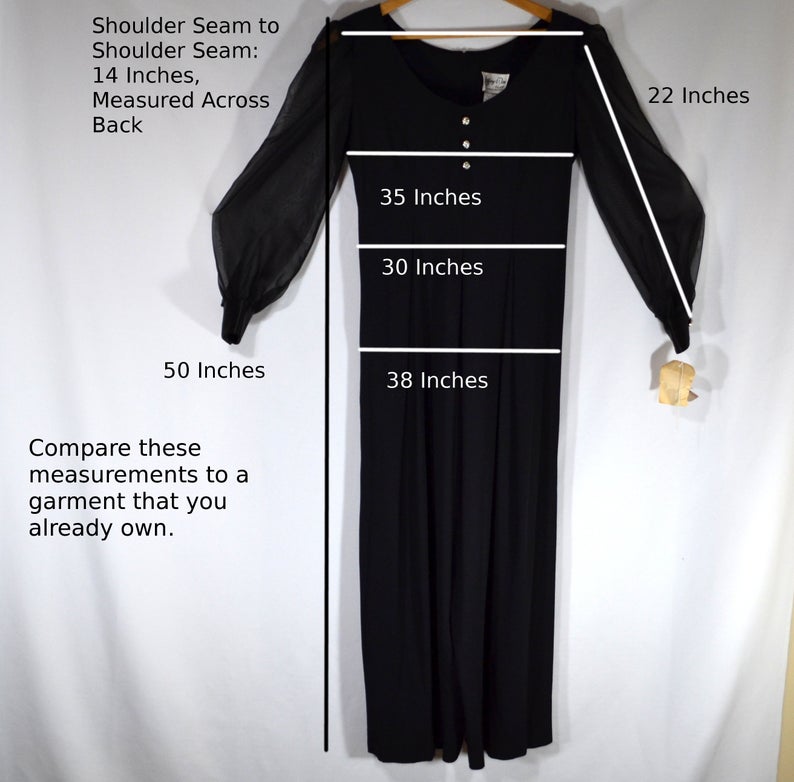
Here are some of the common measurements that you’ll need to know when shopping for vintage clothes online:
- Bust: Measure from the side seam directly below one armpit to the side seam directly below the other armpit.
- Waist: Measure the narrowest part of the garment between the bust and hip.
- Hip: Measure about 7 to 9 inches below the waist.
- Shoulder seams: Turn the garment so that the back is facing you and measure the distance from one shoulder seam to the other.
- Sleeve length: Measure from the top of the sleeve to the edge of the cuff.
- Garment length: Measure from the shoulder seam to the hem.
Once you have the same measurements that you see in the listing, compare the numbers. The measurements may not exactly correspond, but if they’re close, you should be good to go! Remember to take into account how close-fitting the garment is or if it will have any stretch when you compare the numbers. An inch smaller around the waist won’t matter much for a knitted sweater, but may make a great deal of difference for a woven cotton shirt dress.
If you have any questions about online shopping for vintage clothes, leave them in the comments section!
To see vintage clothing and more available for sale in our shop, click here.
Vintage Clothes Buying Tips for Online Shopping Read More »